

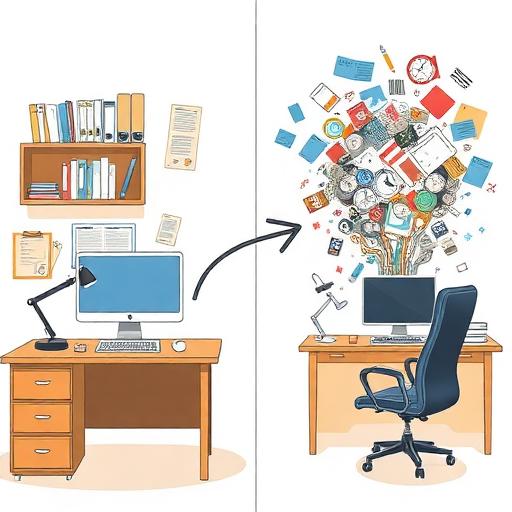
Let’s dive into a sneaky pair of culprits: mental clutter vs physical clutter. Mental clutter is that whirlpool of thoughts in your head—like a tangled web of worries, never-ending to-do lists, and a cascade of anxieties. Physical clutter, meanwhile, can look like mountains of paper, clothes that lost a battle, or gadgets gathering dust.
Why should you care? Because managing both lifts a weight off. Clean your space, clear your mind; it’s like peanut butter and jelly—a classic combo for peace. Think of it as decluttering your mind for calmness and organizing your space so you don’t trip over a sneaker while sneaking a midnight snack. Sound familiar?
Table of Contents
- Understanding Mental Clutter
- Understanding Physical Clutter
- The Connection Between Mind and Space
- Decluttering Your Mind: Mental Clarity Tips
- Home Organization Benefits: Beyond the Physical
- The Minimalism Lifestyle: A Unified Approach
- Sensory Experiences: How Clutter Affects Your Senses
- Humor in Decluttering: Laughter is the Best Medicine
- Tips for Long-term Maintenance
- Conclusion: A Harmonious Balance
1. Understanding Mental Clutter
Let’s break it down; mental clutter is like “static noise” in your head, right? Thoughts buzz like bees, making quiet moments hard to find. It’s stress, emotions, and the overload of info—it’s like having too many tabs open. Been there, done that.
Where does it come from? Sneaky sources sneak up: surprise work deadlines, worrying about your hamster’s happiness, or just deciding what to eat. And that hum in your head? Annoying like a mosquito at a campfire. I know, right?
2. Understanding Physical Clutter
Now to physical clutter. This one’s a villain for anyone who loves a tidy space. It’s knotted cables behind the TV, your messy desk, or a wardrobe scene of chaos. The aftereffect? Stress and anxiety—often making an entrance when you step on a LEGO barefoot. Ouch.
This mess is visual chaos that screams “tornado” instead of “cozy home.” Ever tried tidying up, only to find chaos anyway? Me too.
3. The Connection Between Mind and Space

Your messy desk might mirror what’s swirling in your brain. Research shows a strong link between a cluttered environment and a cluttered mind. You ever feel like your sock drawer turns into a mini tornado after a tough week?
When your space is messy, it can magnify what’s in your head and vice versa. Coincidence? I think not.
4. Decluttering Your Mind: Mental Clarity Tips
Okay, time for tips. Want mental clarity? Try these:
- Meditation: A brain’s spring cleaning.
- Journaling: Unload bouncing thoughts.
- Mind Mapping: See the big picture on paper.
A clear mind isn’t just nice; it’s needed. Honestly, who doesn’t want their brain to feel like new?
5. Home Organization Benefits: Beyond the Physical
Yes, a neat place looks great. But it calms the mind too. Coming home to a place that doesn’t scream chaos feels good. You feel calmer, focused, and maybe even happier? There’s a real sensory shift—a soft sigh as tension melts away. Your home isn’t just tidy; it’s a safe haven. Ever felt that? Wild, isn’t it?
6. The Minimalism Lifestyle: A Unified Approach
Let’s talk minimalism. It’s not for everyone—who needs that many shoes? But having fewer, meaningful items can pull mental and physical clutter out of life. It’s not about empty rooms. It’s about filling space and mind with meaning. Prioritize and savor what really matters. Sound familiar? Good.
7. Sensory Experiences: How Clutter Affects Your Senses
Your senses react powerfully to clutter (trust me on this). Ever get overwhelmed just by seeing junk tumble out of a closet? That’s your senses calling for help.
A cluttered space hits the senses hard:
- Sight: Mess distracts. Annoying, right?
- Touch: Piles suffocate. Stress out your space.
- Hearing: Even noise from clutter can jangle nerves.
It’s like sensory overload. And yes, I really mean it.

8. Humor in Decluttering: Laughter is the Best Medicine
We can’t forget humor. Who hasn’t laughed when the remote is hidden under holiday baubles? Or found an odd snack in a weird spot? (Don’t ask me how I know this). Laughter can ease the burden. Share memes, make playlists, laugh when another sock goes rogue.

9. Tips for Long-term Maintenance
You’ve decluttered—nice job! What’s next? Make habits to keep it up:
- Tidy up before bed.
- Monthly evaluations (“Where’d this come from?”).
- Use a rotation: One thing in, one thing out.
Feel the joy of everything in place—click! It’s about habits and hearing the silence as you breathe in calmness.
10. Conclusion: A Harmonious Balance Mental Clutter vs Physical Clutter
It’s worth it—dealing with both mental and physical clutter is the way to balance. Start small, celebrate wins, even tiny ones like finding every lost pen. Celebrate now and dream big. Peace in mind and space is possible. In the wise words of an unknown sage: “A journey of a thousand miles begins with a single step.” Or for decluttering, a single sock.
Need more inspiration? Discover how to simplify your space for mental clarity. Or dive into the world of basic DIY skills everyone should learn to transform your home and mindset.
Author


