

How to Overcome Burnout: Signs & Recovery Tips
Burnout! It’s like the sneaky bad guy of our lives, slipping in unnoticed like a charger you can’t find at 1% battery. The term isn’t new, but these days, it’s spreading faster than your unread emails. Why? This post is all about spotting burnout signs and bouncing back with practical burnout recovery tips. You ever feel like your brain’s battery is almost out? Yeah, let’s sort that out before you mentally tap the “off” button.
Table of Contents
- Defining Burnout: More Than Just Stress
- Recognizing the Signs: Is It Burnout or Just a Bad Day?
- Emotional and Physical Symptoms of Burnout
- Common Causes: What Triggers Burnout?
- The Impact on Everyday Life and Productivity
- Strategies for Overcoming Work Burnout
- Self-care Techniques to Recover from Burnout Fast
- Establishing Work-Life Balance: Prevention Is Better Than Cure
- The Role of Support Systems in Recovery
- Conclusion: Prioritizing Well-being and Embracing Change
Defining Burnout: More Than Just Stress
So, burnout vs stress. Imagine stress as a quick summer storm—loud and crazy, but soon gone. Now picture burnout as a non-stop drizzle, messing up your picnic for weeks. It’s sneaky and drags on. Stress is like a never-ending loop of deadlines and emails. Every email ping is a mini thunderclap, wearing you down like old sneakers. If your day feels more like a stormy sky than a sunny beach, burnout could be lurking.

Recognizing the Signs: Is It Burnout or Just a Bad Day?
We all have those days, when time drags on like a sleepy sloth. But is it burnout or just a cruddy Tuesday? Here’s a list of signs of emotional exhaustion to watch for:
- Constant fatigue? Oh yes.
- Detachment from work? Definitely.
- Seeing the world through a glass half-empty? Yikes.
Like, if your dreams are just Excel sheets chasing you, keep reading.
Emotional and Physical Symptoms of Burnout
Break it down, bad dance moves and all. Emotionally, burnout’s like a low-battery alert. Always there, bugging you. Here’s the catch:
- Irritability—everything’s annoying.
- Headaches show up faster than zits.
- Low energy, like you’re out of coffee.
Even little things, like bright screens or chatty coworkers, can be too much. It’s more than tired; it’s like you’re carrying a mountain of unread texts.
Common Causes: What Triggers Burnout?
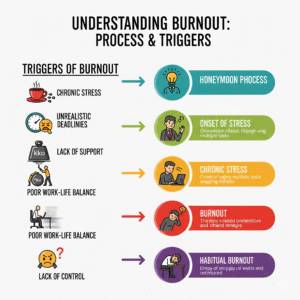
Meet the usual culprits. Too much work? Guilty. No control over things? Yep. Vague tasks? For sure. They’re the villains in your work-life movie, dragging you toward burnout like sunburn after the beach. Plus, being a perfectionist speeds things up, right? Trying to be Superman can feel like kryptonite at home. Do you ever think, “I’ve got this,” while feeling “I can’t take this”? Yep, red flag. Knowing these causes helps you apply practical burnout recovery tips and recognize patterns early. If you’ve ever wondered how to deal with burnout, awareness is the first powerful step.
The Impact on Everyday Life and Productivity
Imagine your computer with 20 tabs open, Spotify jammin’, but only one Wi-Fi bar. That’s burnout, disturbing your productivity. It seeps into life like coffee stains, leaving forgotten chores behind. Not sure if “buy milk” was yesterday’s mission or today’s? Spotting signs early is key, not just for work, but also to avoid feeling like a zombie at your breakfast meeting.
Strategies for Overcoming Work Burnout
Ready for burnout-busting tips? Let’s roll:
- Delegate tasks—seriously, you’re not a lone superhero.
- Set boundaries; not every email needs hyper-speed replies.
- Breaks are gold. Know those relaxing cat videos? Use them.
There’s magic in a tidy schedule and a squishy stress ball. Even quiet notifications can be bliss for overcoming work burnout.
Self-care Techniques to Recover from Burnout Fast

Want to recover from burnout fast? Yep, it’s self-care time to reboot your energy:
- Exercise, or maybe just dance in your PJs to the hits.
- Meditation—everyone needs some chill time.
- Rediscover hobbies. Whether it’s knitting or eating cookies, go for it.
Don’t forget sleep and good food. Total life superheroes. A quick pause for deep breaths can do wonders.
Establishing Work-Life Balance: Prevention Is Better Than Cure
Let’s chat about work-life harmony. Managing time is key. Try these hacks:
- Leave work at work: No emails at dinner, unless it’s a recipe.
- Schedule downtime: Yes, “me time” goes in the planner.
- Self-check often: Watch out before burnout creeps back.
It’s about steering clear from emotional exhaustion roads and heading toward the joyride of balance.
The Role of Support Systems in Recovery
Don’t forget the power of people. Friends, family, even Ted at the coffee shop—they all count. A strong circle is like a fluffy pillow after a long day. Ask for help when needed. A coffee chat with a buddy can be the best free therapy. They listen, offer understanding, and sometimes, the best advice: just breathe.
Conclusion: Prioritizing Well-being and Embracing Change
To wrap up, recovery starts with simple choices that put you first. Take steps now, fight burnout, and welcome changes for healthier days. Enjoy the little things, spot warning signs early, and don’t shy from a routine shake-up for a brighter mental outlook. So, what’s your first move today? Future you will thank you for charging your mental battery to full.
For more ways to rejuvenate your life and boost productivity, check out how to start your morning routine for maximum productivity.
If DIY projects are your stress-buster, explore some basic DIY skills everyone should learn and revitalize your creativity.
Author


